3 Ways that AI will change healthcare forever
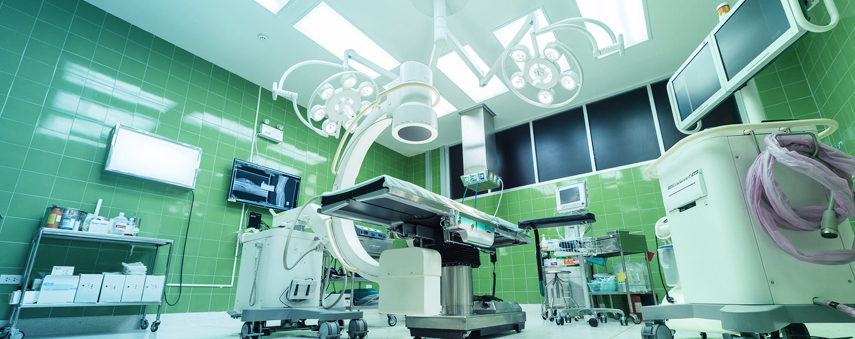
There’s a chance that AI will help us to live forever. For now, however, the technology is stimulating significant advances in medicine and healthcare.
Artificial intelligence does a sophisticated job quicker and cheaper than a person can do it. That’s the idea anyway: as AI makes its way across various human sectors, it seems that the tasks we assign to robots are getting more and more important. AI can build vehicles. It can even drive them for us. AI has even been used to identify whether someone has suicidal tendencies by their Facebook posts.
We are beginning to place our lives in the hands of AI. The natural progression is for complex algorithms to shed more light on our health and to help with operations.
The problem with misdiagnosing mental health often lies in objectivity. Where AI steps in to help, is by analysing subjects rather than objects.
Knowing exactly how far AI will extend in our healthcare is difficult. Whilst it’s easy to imagine every aspect of our lives being enhanced by intelligent tech in the next few years, there are questions on how far we should integrate AI. A robot is no substitute for human delivered care, according to some. Jobs will no doubt evolve and potentially a lot of them could be lost as we employ more machines. Judgement around patient behaviours and responses are critical. Machines don’t need to just think like us, they need to care like us.

Regardless of these debates, the future is very exciting for healthcare when it comes to AI. With artificial neural networks (ANN), scientists can build an interconnected group of nodes that reacts in a similar way to the human brain. From here, it possible to program machine learning (ML) algorithms that become wiser with every drip of information it is fed.
Is it so much of a leap to imagine being diagnosed by a machine that’s learned every illness on Earth? Or perhaps being treated by a machine that can track your recovery? AI is already being used in parts of the healthcare industry and it’s only set to expand further.
AI diagnosis
AI thrives on data. Typically, this is what we think of when we imagine artificial intelligence. Code-cracking machines assessing copious amounts of numbers to come out with clever conclusions.
When you imagine ML in basic terms like this, it’s easy to see how AI could be used for diagnoses. Feeding a machine large amounts of data and allowing it to analyse patient medical records and medical imaging analysis could improve the diagnosis of millions of patients. If a condition is hard to spot, it may take a deep search from an AI-assisted robot.
Mental health, for example, is extremely difficult to diagnose. With so many categories of disorders along with overlap of symptoms, getting the right diagnosis for many patients is often a case of trial and error. Mental illness has a habit of presenting its victim with a mask. It is deep-rooted and its pain is hard to quantify.
The problem with misdiagnosing patients often lies in objectivity. Often, there’s a right answer and a wrong answer as to what doesn’t feel well. That goes for physical health as well as mental health. Where AI steps in to help, is by analysing subjects rather than objects.
ML can cross-validate its findings. Training part of a data set and testing its prediction accuracy can bring us closer to the correct answer when it comes to assessing illnesses in the future.
AI-assisted surgery
Surgery is all about precision. A tenth of a millimetre can be the difference between life and death. Surgery is the most complicated medical domain and with intense time pressure and decisions that need to be made on the spot.
AI can provide critical insights and help surgeons better understand techniques that align with better outcomes. AI can also provide real-time data points about the movements that surgeons make during a procedure.
AI offers care that’s consistent, precise and eventually, cheap.
ML algorithms can learn from thousands of previous operations. A visual overlay inside the surgical space, for example, could show critical areas of a patient that the surgeon should avoid. Such algorithms that learn from examples and work to precision could actually carry out procedures too. Microsurgery can also embrace AI to stabilise shaky handy from a surgeon’s actions to ensure that an operation is carried out with the smoothest possible movements.
AI assistants
Aside from spotting and performing medical procedures, AI can be used in aftercare.
Voice assistants are a logical step to help with reminding patients to take medication and analysing ongoing symptoms. Not only does voice-activated AI respond to the requests that patients have, but it also removes a lot of data entry involved in tracking recoveries. AI assistants would not only provide 24-hour care but would be cheaper than visits to a surgery.
Whilst AI spreads fear for many people, 64% of patients are excited about AI assistants. In the coming years, it seems likely that healthcare could be one of the first sectors that AI integrates with on a massive scale. Aftercare is perhaps the easiest way for AI to assimilate easily, too.
With healthcare, comes an expectancy of long working hours and dedication from staff. The need for almost-robotic motivation and accuracy in the job is a strain for many. Across the world too, medicine is expensive and funding a health service takes a lot of investment. AI can help to lend a hand.
AI offers care that’s consistent, precise and eventually, cheap. Whilst the idea of being treated for a triple heart bypass by an android is daunting, the reality of AI in health is a little less scary. AI has the potential to revolutionise how we treat patients.

